
Moon Juice started with morning greens in Venice and now lives on nightstands as powders and capsules. Amanda Chantal Bacon describes harvest lots, extract ratios, outside labs and GMP suites, and what still stays hard to show.
January 2012 is the date she chose, pregnant and pouring juice in a small tiled shop in Venice, California. The air held salt and citrus peel and fresh pressed greens, and behind the counter she kept mixed herbs in plastic bags for her own use.
She had moved west from downtown New York after work in kitchens with Suzanne Goin and Alice Waters, followed by a role as assistant food and wine editor at Los Angeles Times magazine. In her early 20s she received an autoimmune diagnosis linked to stress, then studied Traditional Chinese Medicine, Ayurveda, and Russian and Tibetan medicine, and brought the condition into remission through steady diet, lifestyle and herbal care. She has shared that Moon Juice grew from her time guiding an autoimmune condition into remission after hearing it could never happen.
What stayed with us, and what many profiles pass over, is how soon taste gave way to records. Shop drinks grew into Beauty Dust, Brain Dust and Spirit Dust, created with an herbalist and checked potencies, then into national retail and now a range built around Super supplements, Cellular Waters, Moon Dust and skin care. The thread here is source, dose, form. Bacon returns to those three words, and Well with Luna asks her to support them, lot by lot.
You tell of Moon Juice as grown from mushrooms, herbs, adaptogens, minerals, soft rituals and learning that helped you guide an autoimmune condition into remission. How do you hold that story at night without suggesting a powder or capsule can do the same for another person?
Moon Juice grew from my time guiding an autoimmune condition into remission after hearing it could never happen. I repeat it because it happened, and because it shows why I remained with plants. My work is serving as manager, cheerleader, salesperson and marketer for these plants that have saved my life. That is support, not a prescription.
I also feel that health is not a fixed state, but a gentle work that continues through life, and I feel that not knowing everything is truly a good place to begin. So we point to label amounts, to traditional use records, and to doses used in human clinical studies. We point to small evening rituals a person can sustain. We never state that a supplement diagnoses or alters a disease course. The brand speaks of support for stress, rest, focus and beauty from within, while the Supplement Facts panel lists the dose. The remainder sits with the reader, their clinician, and time.
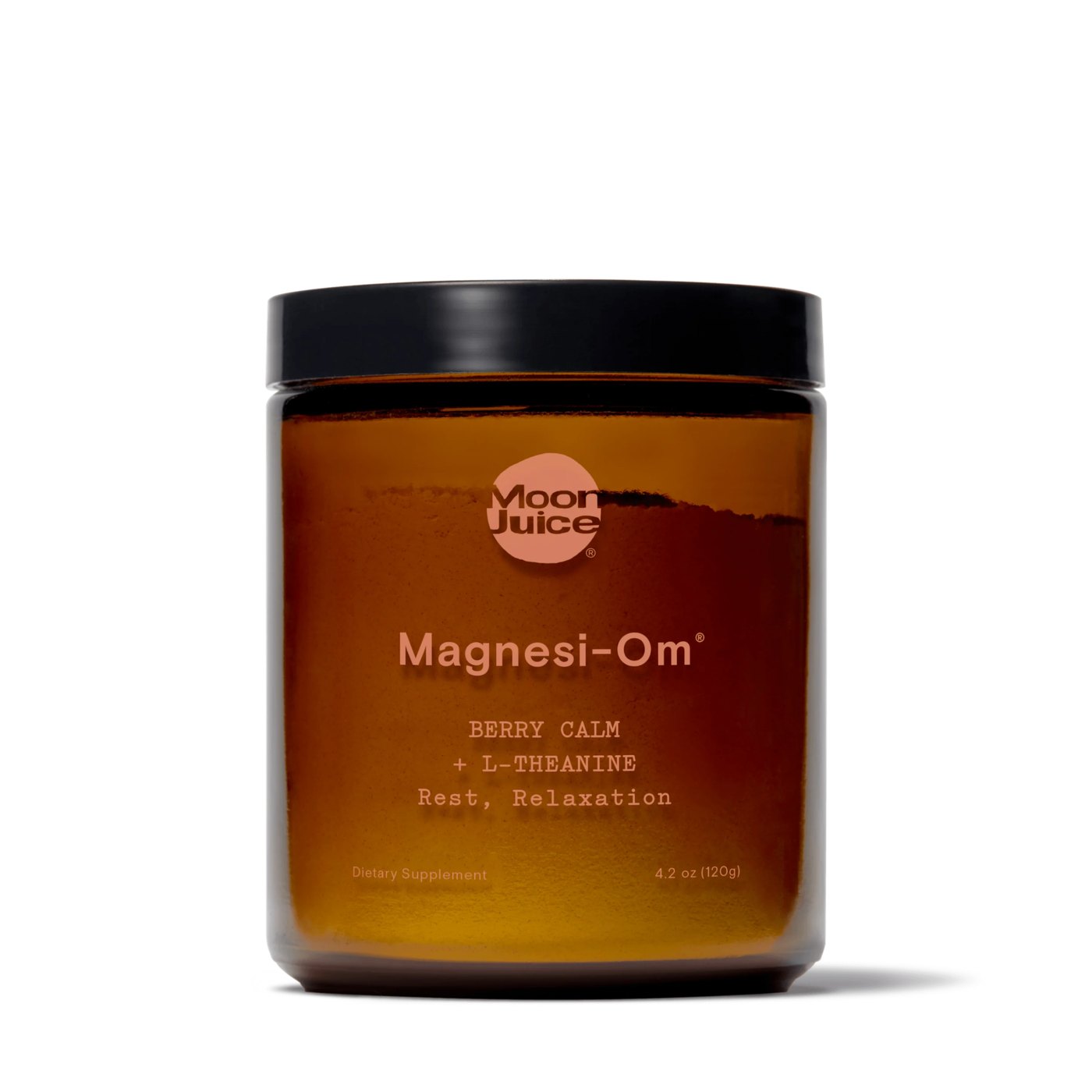
Magnesi-Om at 44 dollars for the Berry jar is now the first jar you suggest, a teaspoon in water in the evening. Magnesium anchors your line. Where is your magnesium sourced, how is it handled, and what does outside testing truly measure?
Every cell in the body needs magnesium to work, and our site notes that more than half of us do not get enough from food, which is why we keep magnesium powders for rest and regularity close by. Magnesi-Om mixes several forms, including chelated types picked to dissolve in water, in Berry and Blue Lemon, plus stick packs for travel. You stir a teaspoon of powder into water in the evening and sip it. That is the practice.
Sourcing means we purchase magnesium salts with origin and production records, verify identity and assay, and screen finished lots in outside labs for heavy metals, microbes and purity. Powders are blended, then assessed for uniformity so one teaspoon matches the labeled amount. Made in GMP certified facilities means the plant uses written procedures for cleaning, batch records, fill weight checks and quarantine until release. I direct people here first because the habit stays simple and the file stays complete, from raw lot to jar.
You opened in Venice in January 2012, pregnant, pouring green juice and ashwagandha chocolate milk, and you have shared, I opened Moon Juice in Venice, CA in January of 2012 by Gods grace. What did that small tiled shop show you about sourcing that still guides the capsule line today?
I sip juice through the whole day, and I wanted to share how calm and light it made me feel with others. Those words describe the start. I had juiced for years to balance kitchen shifts because cold pressed shops did not yet exist, so I prepared my own organic juices. In Venice we pressed greens each morning, prepared almond milk in house, kept GMOs, pesticides and toxins out of the juices, and listed everything on the board for reading.
What remained with me was the short life of fresh juice. It lasts a day, and then it fades. Herbs behaved differently. I blended them in plastic bags for myself, and I really enjoy the taste of the herbs. I have kept this longstanding relationship with herbs, always reading about them, always studying with different herbalists, talking to different herbalists. I joined an herbalist to shape those bags into Beauty Dust, Brain Dust and Spirit Dust with tested potencies. That shift, from a pinch to a measured dose from a named source, carries the whole company now.
Your blend comes down to source and dose and form, with ingredients from 100 percent traceable sources measured from human clinical studies and traditional use. In daily work, what does traceable cover at Moon Juice, from grower lot to certificate of analysis?
Traceable means we can state where a lot grew, when harvest occurred, how drying was done, and what the lab reported. For botanicals that begins with the grower and the harvest lot, then the extraction, whether water or hydroethanolic extract, the extract ratio, and whether standardised to a marker compound. Ashwagandha in our pantry, for example, appears as a 15 to 1 full spectrum extract, which means fifteen parts of root formed one part of extract.
Each lot holds a supplier certificate of analysis, followed by outside testing for identity and purity. The finished product comes from GMP certified facilities. I would rather take traceable plants and minerals daily than depend only on quick fixes, and I would rather produce potent clinical doses without fillers than produce cheap capsules. When a grower cannot supply the papers, we decline that lot.
Sex Dust at 38 dollars, stirred into morning coffee, was the early signature that took Moon Juice beyond Venice to Urban Outfitters and Amazon by 2017. What did that blend reveal about extract quality when a powder must dissolve, taste pleasant and still test true?
Sex Dust showed me that pleasure sustains the ritual. People rarely keep a bitter and gritty formula for long, even when the papers appear strong. So taste and testing had to be solved side by side. We picked extracts that would spread in hot coffee, left the formula free of fillers or flow agents, and screened each lot for identity and purity before blending.
I really enjoy the taste of the herbs, so my palate served as the first screen. Then the lab served as the second. The lesson was to turn down shortcuts that inhibit absorption or increase fill weight. We turn away flow agents that slow absorption. That decision slows manufacturing, because powders lacking flow aids run less quickly on the line, and encapsulation needs closer watching. Yet the cup must stay enjoyable and the lot must meet spec, or we hold shipment.
I would rather welcome traceable plants and minerals nightly than rely only on quick fixes.
Amanda Chantal Bacon
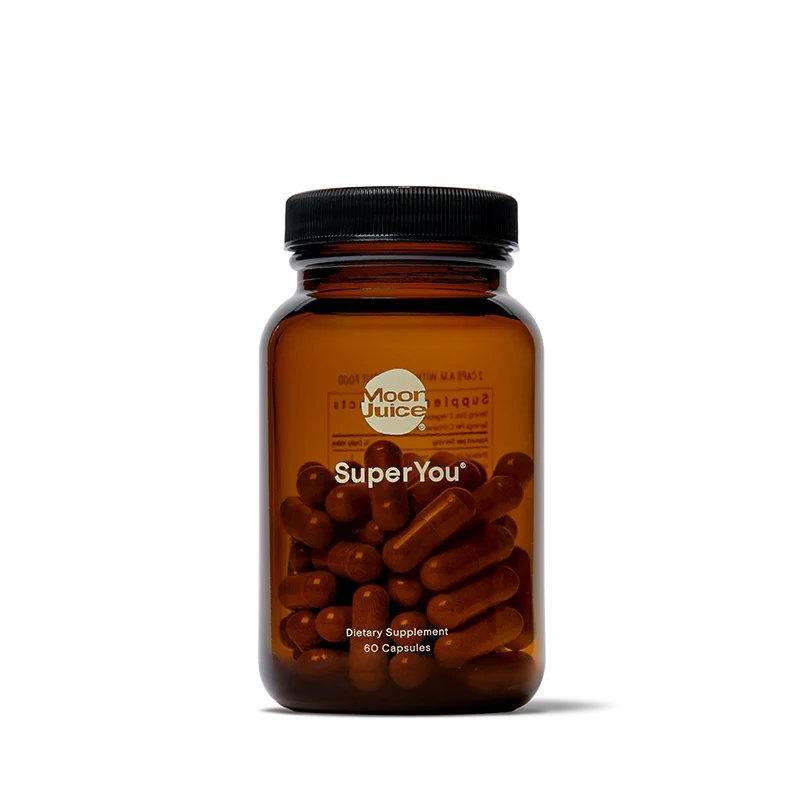
SuperYou at 54 dollars, two capsules in the morning, is your bestseller, and you have shared, We have millions of people on SuperYou at this point, so we know it is working. Follow the path from field to capsule, what gets extracted, how it dries, and how the dose is fixed?
SuperYou is our daily buffer to help soften the effects of stress, in brand wording, with care for energy, mood and focus listed on the page. It blends adaptogens including ashwagandha and reishi, plants with long use to help the body build resilience to stress. We develop formulas with chemists, scientists, doctors, herbalists and experts, and we set doses from human clinical studies and traditional use.
From field to capsule the sequence runs like this. The grower harvests and dries the root or fruiting body, then the extractor conducts a water or hydroethanolic extraction, concentrates it, dries it to powder, and mills it to size. We order to a spec that states the ratio or standardisation, inspect the certificate, and conduct outside testing for identity and purity. Then we mix without fillers or flow agents, encapsulate, verify fill weight, and quarantine the batch until the lab approves release. Take 2 capsules in the morning with your coffee or while you brush your teeth. We selected that form because the dose would prove hard to drink as tea each day.
You refuse fillers and flow agents, which many shoppers never notice on the other ingredients line. What does that refusal require in the factory, and how do you support bioactive and bioavailable without those aids?
It requires time and care. Flow agents assist powders in moving through hoppers and capsule machines without clumping. Lacking them, we control particle size, humidity, blending time and machine speed with greater care. Encapsulation moves slower. Fill weight gets checked more often. We honor the slow pace because we seek bioactive and bioavailable plants and minerals you can trust and feel, and we see aids that block absorption as contrary to that wish.
Support rests on two parts. First, we choose forms with recognized solubility and traditional or clinical dosing history. Second, we confirm identity, potency and purity lot by lot, and produce in GMP facilities with batch records. Bioavailable is a measured property in pharmacology, and we never frame a lab assay as a blood level result. What we can present is the form selected, the dose on the Supplement Facts panel, and the test results behind that lot. That is what trust and feel must stand upon.
Adaptogens like ashwagandha and reishi hold long traditional histories plus newer clinical literature. How do you sense when tradition suffices, when a human trial dose is needed, and what stays off the label.
We begin with tradition to select the plant and the part used, root, fruiting body, leaf, and its preparation. Then we search human clinical studies to fix the daily dose and to learn what researchers actually tested. When only traditional or preclinical data exist, we use more restrained language and we hold the dose near traditional use. When human studies exist, we dose from them.
We will not say in this quiet evening space that a blend treats stress, anxiety, infertility or any disease. The site keeps structure function language, support for stress, mood, focus, rest, beauty from within, alongside an FDA disclaimer. I would rather nurture curiosity and self education than sell only to buyers. So each page includes benefits, how to use, ingredients and sourcing sections, and readers can study the Supplement Facts panel and decide with a clinician whether it belongs on the household shelf.
Where in the chain do you remain opaque, and what would open it, farm names on the label, pesticide panels per lot, or something else?
We claim 100 percent traceable sources, and I wish that phrase to carry more weight each year. Today we track grower, harvest, extraction and finished lot testing, and we produce in GMP facilities with outside testing for identity and purity. What shoppers still cannot view is the complete file per lot, pesticide panels, heavy metal values and the grower name for each botanical, printed or linked from the label.
Opening it would mean publishing lot level summaries matched to the jar or bottle in hand, not only a general sourcing page. That requires growers, extractors and labs to share one format, and to refresh it with each lot change, which occurs often with harvests. We are a female owned company that expanded from two shops to sales on several continents with a team of 75 as of 2017, so change management stays real. The direction remains clear, though. Pleasurable daily rituals must become provable daily records. Until then, request the certificate, study the other ingredients line, and measure us by source, dose, form.
Closing note from the desk
After this talk, the span from Venice tile to batch record lingers. Bacon still speaks like a shopkeeper who tasted each jar, and now she speaks like a buyer who requests the harvest lot and the lab sheet. That pairing stays rare, and it fits a nightstand buyer who keeps a small shelf for years.
Moon Juice aimed to create pleasurable daily stress management with traceable, potent, absorbable plants and minerals. Looking back, the range shows named extracts, measured doses without fillers, outside labs and GMP rooms, with farm level papers as the next record to publish. That is the labor, put plainly, for calmer lights out and clearer first light.
Product spotlight
Magnesi Om, 44 dollars for the Berry Jar, is a magnesium powder for rest and relaxation and regularity. The brand suggests a teaspoon in water in the evening. It combines soluble magnesium forms with flavor, checked lot by lot for identity and purity and produced in GMP facilities. Begin here if you study labels first, especially before lights out.
SuperYou, 54 dollars for the Bottle, is a clinical strength adaptogen blend for daily stress care. The brand suggests 2 capsules in the morning with coffee or while brushing teeth. It focuses on ashwagandha and reishi measured from human studies and traditional use, without fillers or flow agents. Keep it where mornings start, not on the nightstand.

Courtney Belknap
Courtney produces the interviews at Well with Luna: the research, the question lists, the late follow-up calls. She asks every founder about the worst night that started the company, and then about the dose.
More from Courtney Belknap →