The shelf by the register held lip balm, magnesium gummies and small pastel boxes of mouth tape, each one promising calmer sleep through the nose. A hand hovered, then moved on toward the tea. The question stayed behind on the shelf, simple and late night in its worry. Is snoring a habit of the mouth, or a signal from the nose that air has grown hard to find?
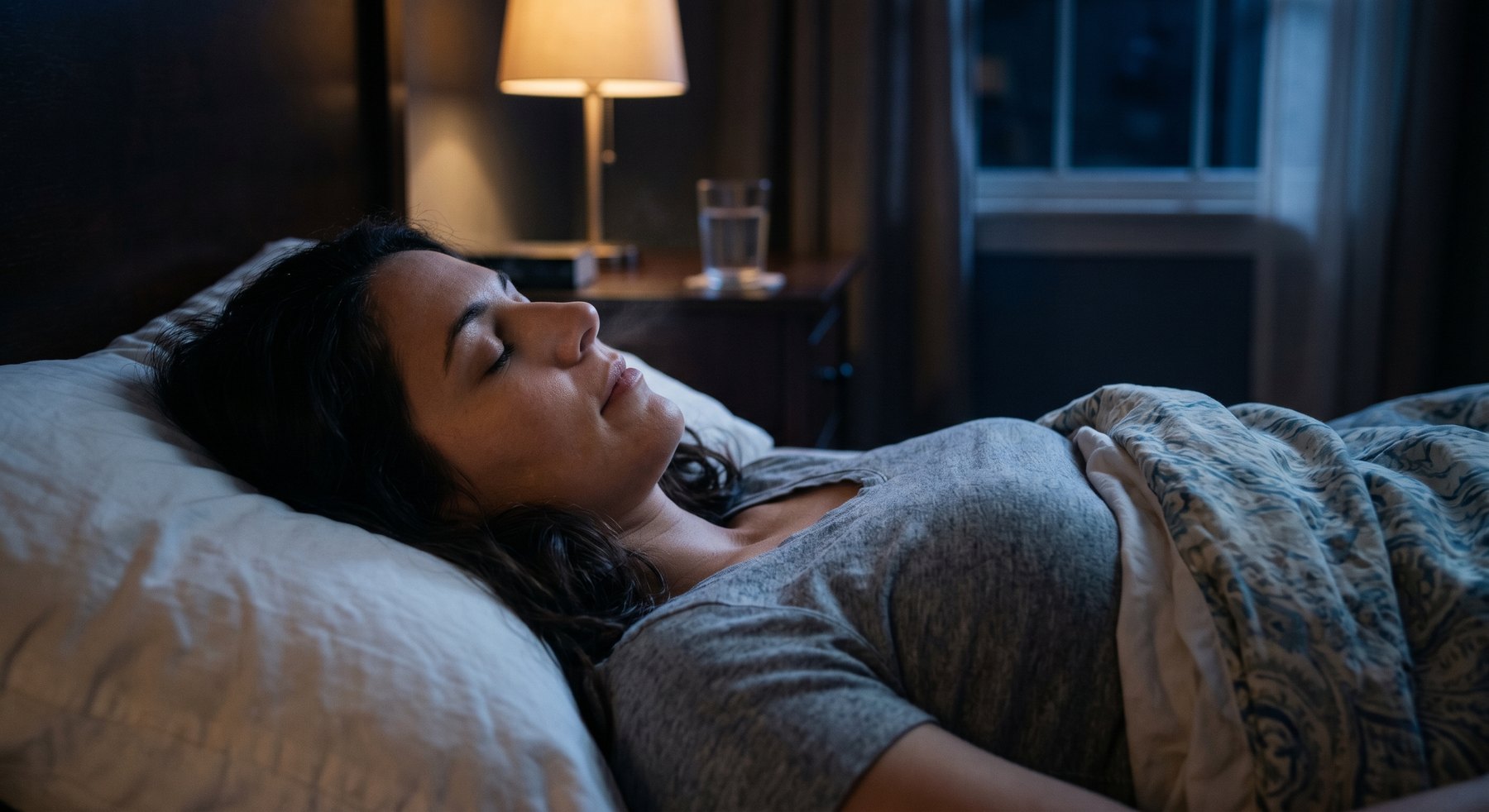
The lamp was still on at half past ten when the tape came out of the nightstand drawer, neat and pale as a bandage. It sat beside the phone and the water glass and the humidifier breathing its cool cloud into the dark. Somewhere between a yoga class remembered from years ago and a video about snoring, the nose had become a project. The strip went on, the lights went out, and sleep either came quieter or it did not.
What the nose does all night
The nose warms, humidifies and filters inhaled air and produces nitric oxide, which is described as a bronchodilator and vasodilator. That quiet chemistry is one reason nasal breathing has stayed central in yoga, where breath is practice rather than background. Pranayama is described as the fourth limb of yoga and includes bhastrika, kapalbhati, nadi shodhan alternate nostril breathing and bhramari bee breath. Hari Sharma, MD, professor emeritus at The Ohio State University College of Medicine, said, “Prana is the breath of life, the breath that keeps you alive.”
Physiology gives the old practice some modern weight. In the quiet of the evening, researchers link nasal airflow resistance to 10 to 20 percent higher oxygen uptake and greater diaphragm activation. At rest the difference can show in the nervous system. Alternate nostril breathing was tested in 25 healthy male students aged 18 to 22 years in a medical institution in north India over one year. Participants trained in alternate nostril breathing for 15 minutes daily for 6 weeks and were tested at basal condition and after 5 minutes of the practice. After 6 weeks of training, basal E:I ratio and 30:15 ratio showed statistically significant increases with p less than 0.05 compared with initial basal values. Those ratios reflect cardiac response to breathing, a small sign of calmer autonomic balance.
The pattern shifts with effort. A randomized experiment in 107 physically active college students compared NN, NM and MM breathing during bench press repetitions to failure. In both genders, no significant differences in repetitions to failure, perceived exertion and blood oxygen saturation were found across NN, NM and MM regimens. In males, heart rate was significantly lower during nose in nose out trials than nose in mouth out with p equals 0.033 and mouth in mouth out with p equals 0.047. Habit runs the other way. Questionnaire results found 80 percent of participants use nose in mouth out, 15 percent use mouth in mouth out and 5 percent use nose in nose out during resistance training. Breath through the nose soothes at low intensity, then the mouth opens when the body asks for more air.
“Breathing is often overlooked as one of the most powerful levers we can pull to impact multiple areas of our health.” That line comes from a clinical practice author at Cultural Health Solutions, and it fits the evening mood. Barbara Tobin, OTR/L, certified yoga teacher for Dana-Farber Cancer Institute, said, “Breathwork becomes a tool they can access anytime: before scans, during flare-ups, or anytime they feel an imbalance in their energy.” Night breathing asks for the same gentleness. The nose works best when it is clear, moist and unhurried.
Why the mouth opens after lights out
Mouth breathing during sleep is connected to greater incidence of snoring and sleep apnea and daily mouth breathing is linked in reviews to dental decay, gum disease, malocclusion and enlarged tonsils and adenoids. The roots can start early. More than half of school aged children are chronic mouth breathers and 25 percent of young children have sleep disordered breathing patterns by age six. A stuffy nose, allergies, a deviated septum or swollen turbinates can narrow the path. The mouth opens to keep air moving, and sound follows.
That is where the small pastel box entered the nightstand. A dentist describes a 2022 study in Healthcare that found reduced snoring intensity in mild snorers with no diagnosed apnea and a 2023 pilot in Journal of Clinical Sleep Medicine that found porous tape reduced apnea hypopnea index in 30 patients with mild obstructive sleep apnea. Those results sound hopeful on a tired evening. They describe select people, watched closely, with mild complaints and open nasal passages.
The wider record is thinner. A 2025 systematic review in PLOS One screened 120 articles and included 10 studies with a total of 213 patients on mouth taping for mouth breathing, sleep disordered breathing or obstructive sleep apnea. The 2025 PLOS One review found two studies showed statistically significant improvement in apnea hypopnea index or oxygen desaturations, while other studies showed no differences. In 2025 the PLOS One review reported that many studies excluded anyone with nasal obstruction or pathology. In other words, the people most likely to struggle with tape were often not in the trials at all.
Easier air through the nose may help some snorers rest quieter, but tape cannot tell snoring apart from apnea.
Professional guidance stays cautious. The American Academy of Sleep Medicine holds that current evidence is insufficient to recommend mouth taping for any sleep disorder and no clinical guidelines endorse it. A June 2025 TRICARE Dental Program article states mouth taping is not a treatment for diagnosed sleep apnea and advises talking to a dentist, medical doctor or sleep specialist first. The CDC has not issued a statement promoting or discouraging mouth taping, as reported in a U.S. Defense Health Agency article. Sleep physicians point to risks including asphyxiation with nasal obstruction, a stark word for a soft looking product by lamplight.
A slower way toward quieter sleep
Most people who reach for tape do not know how they sleep. Mayo Clinic estimates that 80 percent of moderate to severe obstructive sleep apnea cases are undiagnosed. Apnea is linked to hypertension, arrhythmia, stroke and cardiac death, which makes a simple bedtime habit feel heavier than its soft packaging suggests. Snoring content online blurs the line further. Much of the talk around it is anecdotal or promotional, while dentists and sleep physicians say evidence is thin and screening should come first before bed.
A kinder sequence begins before bed with the nose itself. Warm showers, saline rinse, allergy care, a clean pillowcase and cool humid air may help some people breathe easier through the nose. Structural blockage deserves clinical attention rather than stronger adhesive. Nasal breathing tested well at rest and light exercise but people switch to mouth breathing at higher intensity, and not all pranayama techniques are safe for everyone such as those with heart problems. Slow alternate nostril breathing in a chair, learned from a trained teacher, supports a calmer hour before bed for some. It does not promise sleep. It gives attention somewhere soft to land.
What remains unknown is large. How common nighttime mouth taping is in the general population and how long people continue it is not established. We still have no evidence on whether mouth taping changes long term dental, cardiovascular or cognitive outcomes. Doctors still have no clear way to reliably identify which snorers, if any, are safe candidates without a sleep study. We still understand little about how nasal resistance training or allergy and structural treatment compares with tape for snoring. The nightstand holds many answers because the laboratory still holds questions.
Easier nose breathing may help some habitual mouth breathers snore less, and that modest hope is worth keeping. Tape is no fix for apnea and needs screening first, for obstruction, for snoring severity and for daytime sleepiness that points beyond habit. Better nights begin with clearer air and careful questions, then clearer days can follow.

Annika Holm
Annika looks after the brands Well with Luna works with and makes sure every sponsored page says so. She grew up in Uppsala with very short winter days, which is where her interest in light and sleep began.
More from Annika Holm →